
When nature sets rules, humanity ought to learn to listen through technology
Providence and science represent the two extremes that rarely coexist in the same person and shape their mindset. Still, since neither can exist in isolation, each of them works in ineffible ways.
Have you ever pondered when a natural habitat becomes an environment? This happens when anthropogenic pressures alter its physical, chemical, and biological properties beyond its native species’ tolerance.
At daybreak, when most of humanity is asleep, before machinery takes over farmlands, the forces of nature are wide awake. Fields that sustain the modern consumer culture never tire: moisture shifts beneath the soil surface, a few hectares suffice to form a microclimate, livestock behavior changes deftly yet subtly, and forests carry early signals of stress before perilous events strike.
The Industrial Revolution marked a moment in humanity’s history when people chose to ignore these signals, and businesses shouldered the burden of consequences:
- over-irrigation;
- excessive use of chemicals;
- livestock loss;
- delayed reactions to environmental risks.
These days, environmental issues, some of which have been outlined above, are a matter of precision. This is especially true of how accurately we respond to what ecosystems actually need.
With opportunities that bionics and reverse engineering bestow upon us, we enable a shift from reactive decision-making to prudent data-driven adaptation of evidence-based best practices. Read on to find out how embedded technology redefines operations in agriculture, livestock, aquaculture, and forestry.
From remedying businesses’ pains to implementing embedded solutions. Mapping out the industry
Precision agriculture. Geusswork vs. measured decisions
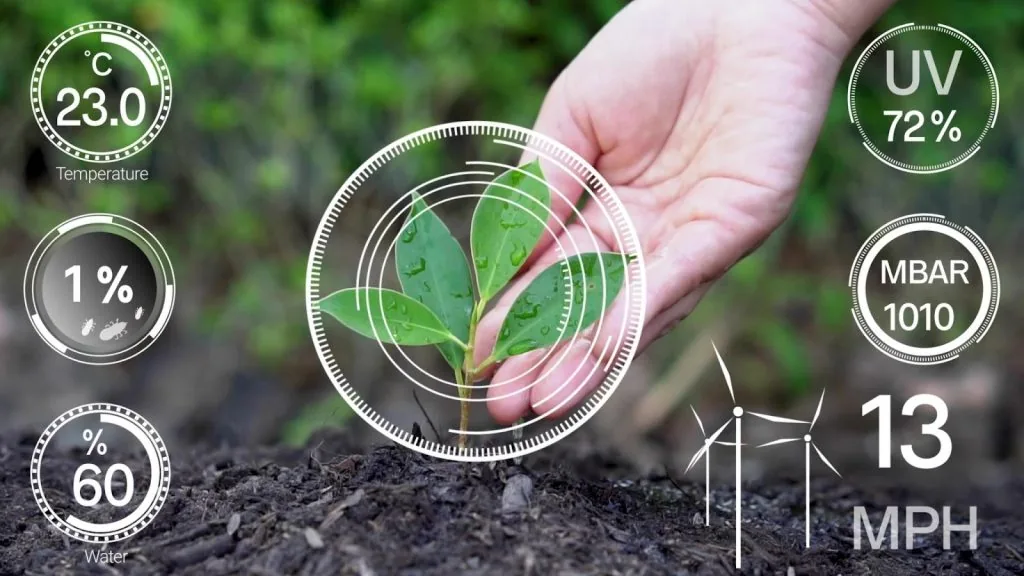
Unexpected costs of approximation
Farmers rarely lose yields in a single dramatic moment. Losses build up quietly. Uneven irrigation, improper fertilization, and delayed pest and weed control originate from a lack of data.
Soil and environmental sensors
Issue(s): Real-time field intelligence.
Solution(s): Sensor networks measuring moisture, temperature, pH, and nutrient content of the soil; aligned with edge-processing and low-power connectivity technologies.
Business outcome(s):
- water and fertilizer use reduced by up to 30%;
- gradual improvement of soil health;
- predictable yields.
Smart irrigation
Issue(s): Resource waste and overwatering.
Solution(s): Embedded irrigation controllers integrating sensor data inputs (including but not limited to water properties and quality, soil condition, and meteorological data).
Business outcome(s):
- up to 40 per cent water saving;
- higher crop consistency.
Variable Rate Technology (VRT)
Issue(s): Consistency and integrity of treatment of lands with versatile and divergent properties.
Solution(s): Embedded control systems enabling variable input application across zones.
Business outcome(s):
- optimized input costs;
- increased per-hectare ROI.
Edge AI for Weed Detection
Issue(s): Excessive herbicide usage.
Solution(s): On-device AI models detecting weeds in real time via camera systems.
Business outcome(s):
- up to 80% reduction in herbicide use;
- lower environmental impact.
Integrated Pest Management (IPM)
Issue(s): Reactive pest control strategies.
Solution(s): Sensor-triggered monitoring systems with predictive analytics at the edge.
Business outcome(s):
- reduced crop loss;
- targeted, minimal chemical intervention.
With precision aquaculture, you do not have to strive to apply as much as possible. You ought to find out exactly how much is enough, the whys and hows of technology’s relevance to your business and the features of the environment. Sensor intelligence, edge AI, and embedded control systems handle uncertainty with traceable, measurable, and real-time insights. This reduces waste generation and restores balance between soil health and productivity. Creating and sustaining a system that remains resilient for a long stretch of time takes precedence over higher yields.
Precision aquaculture. Stabilizing and invisible environment
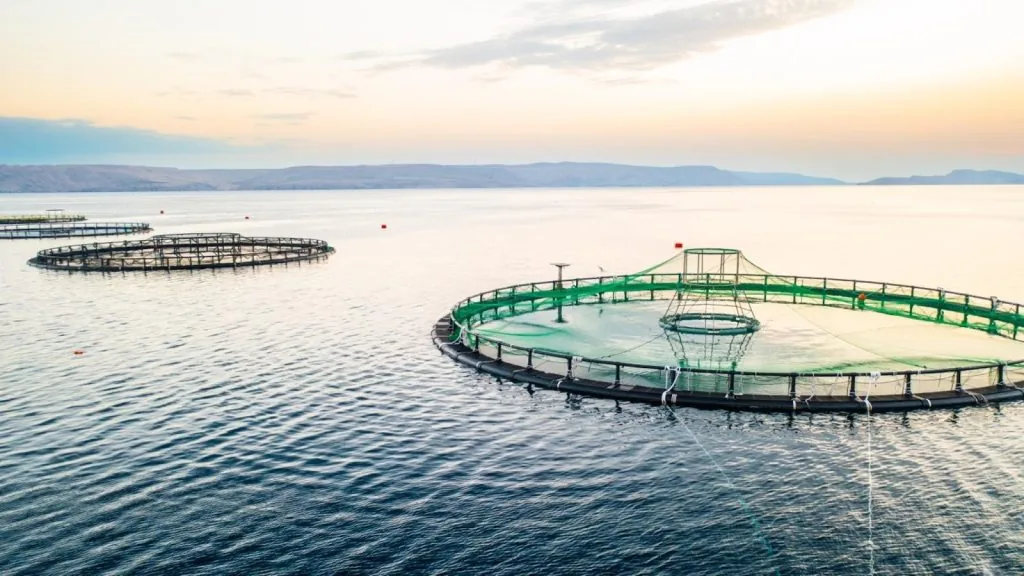
Oxygen depletion, toxic compound buildup, and overfeeding escalate the invisible risks jeopardizing aquatic ecosystems. By the time their impact proves tangible, irreparable damage has already been done.
Water Quality & Environmental Sensing
Issue(s): Uncontrolled water conditions.
Solution(s): Autonomous sensor platforms tracking oxygen, pH, ammonia, and temperature.
Business outcome(s):
- reduced mortality rates;
- stable growth cycles.
Computer vision & biomass estimation
Issue(s): Inaccurate stock assessment.
Solution(s): Underwater cameras with edge AI for real-time biomass estimation.
Business outcome(s):
- precise feeding strategies;
- better production forecasting.
Automated Feeding & Logistics
Issue(s): Feed waste and inefficiency.
Solution(s): Smart feeding systems adjusting output based on behavior and conditions.
Business outcome(s):
- up to 25% feed cost reduction;
- faster growth rates.
Robotics & Autonomous Systems
Issue(s): Labor-intensive maintenance.
Solution(s): Autonomous robots for inspection, cleaning, and monitoring.
Business outcome(s):
- lower operational costs;
- increased safety.
Precision is integral to building a sustainable aquaculture with environmental consciousness intact, for here, the most critical elements are the least visible. Continued awareness, risk prevention, and timely intervention hinge on embedded sensing, edge AI, and autonomy. These technologies make reactive damage control attainable and help it transform into predictable ecosystem management. This leads to improved efficiency and a healthier aquatic environment.
Smart livestock. The meeting point of observation and continuous monitoring
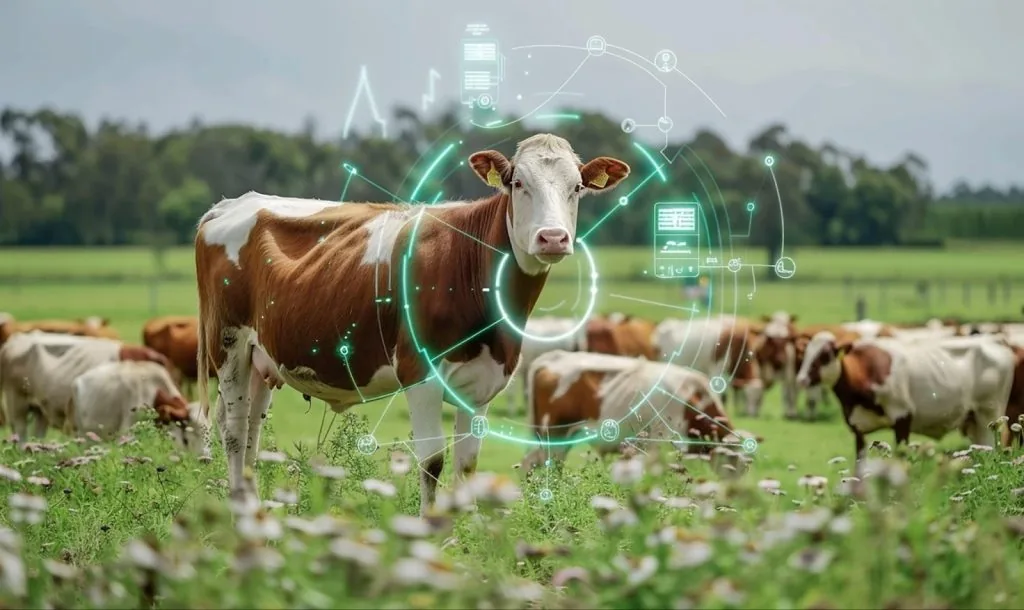
The pitfalls of human attention span
Keeping track of livestock’s whereabouts, monitoring physiological signals, and overseeing behavioral shifts seems nigh on impossible, certainly challenging. This is where embedded systems come to the rescue for humans and animals.
Wearable Biometrics
Issue(s): Late disease detection.
Solution(s): Wearable sensors tracking activity, temperature, and vital signs.
Business outcome(s):
- early detection and intervention;
- reduced mortality.
Virtual Fencing
Issue(s): Costly and inflexible physical barriers.
Solution(s): GPS-enabled wearable systems with behavioral feedback.
Business outcome(s):
- flexible grazing management;
- lower infrastructure costs.
Automated Feeding & Milking
Issue(s): Labor dependency and inconsistency.
Solution(s): Robotic systems with embedded control logic.
Business outcome(s):
- increased productivity;
- consistent product quality.
Water Trough Monitoring
Issue(s): Unreliable water access.
Solution(s): Smart monitoring systems for water levels and quality.
Business outcome(s):
- healthier livestock;
- reduced losses.
The main goal of smart livestock management must extend human awareness about ecosystems and never replace human judgment. Commitment to long-term collecting of physiological and behavioral data translates seamlessly into earlier detection and knowledge-driven engagement. This can potentially improve animal welfare, elevate productivity, and reduce losses. These technological solutions represent a comprehensive and more balanced approach to farming: a framework within which efficiency follows responsibility, like the thread follows the needle.
Precision Forestry. Scale and control alignment

In forestry, time is the most expensive variable that most decision-makers and stakeholders ignore, either unwittingly or deliberately. Wildfires spread within minutes. Illegal logging comes unnoticed. Inventory data loses relevance quickly.
LiDAR & Drone Swarms
Issue(s): Lack of accurate forest data.
Solution(s): Drone-based LiDAR systems with onboard data processing.
Business outcome(s):
- precise resource planning;
- sustainable harvesting.
Fire Detection Nodes
Issue(s): Late fire detection.
Solution(s): Distributed sensor networks detecting smoke, heat, and gases.
Business outcome(s):
- faster response times;
- reduced damage.
Timber Traceability
Business need(s): Opaque supply chains
Solution(s): IoT tracking systems with RFID and secure data layers.
Business outcome(s):
- regulatory compliance;
- market trust.
Autonomous Harvesters
Issue(s): Dangerous, high-cost operations.
Solution(s): Autonomous machinery powered by embedded control systems.
Business outcome(s):
- reduced risk;
- increased efficiency.
Forestry without sustainability, conscience, and prompt intelligence leads to irreversible loss, which makes forests a challenging resource to manage. Embedded solutions introduce visibility into vast and dynamic environments at a point when human oversight is falling short. From early fire detection to transparent supply chains and autonomous operations, they enable faster, more responsible decision-making. The result is a shift toward forestry that is efficient, more accountable, and sustainable over time.
A major transformation. Control through understanding
A pattern that resurfaces across multiple domains is as follows. The very survival of human civilization pivots on contemporaries recognizing that nature is beyond our control. In other words, we must intervene less and strive to comprehend the forces that affect our well-being on a day-to-day basis.
Embedded systems might help us attain all that while ensuring that:
- decisions are made closer to the source via edge computing technology;
- systems continue functioning even with limited connectivity;
- hardware endures real environmental conditions;
- data accounts for assumptions yet reflects reality.
Our priority here is to make operations compatible with the ecosystems’ mechanics.
Why most projects fail and how to avoid it
Agricultural IoT solutions and smart farming technologies, as promising as they are, run their natural course as initiatives due to:
- unreliable connectivity (especially in remote and hard-to-reach areas);
- underestimate power consumption;
- hardware that cannot withstand field testing;
- overengineered systems unsuited for real workflows.
The notion of controllable risk here means that early assumptions have been properly tested.
Feasibility check. A non-optional groundwork
Before you initiate full-scale development, you should carefully and honestly assess your project’s viability in real-world conditions.
UnioTech is an expert in carrying out lightweight feasibility audits:
- connectivity, autonomy, and environmental constraints assessment;
- technical risks identification;
- charting an actionable and attainable roadmap (from PoC through MVP to scaling).
Please contact us to discuss your ideas and the terms of cooperation. Let us build a more sustainable future together.