
Introduction: Legacy Infrastructure and the Reality of Field Constraints
Renewable thinking expands, but oil and gas still runs the physical world. It remains one of the most infrastructure-intensive industries globally. Pipelines, terminals, compressors, pumps, and remote field equipment must operate under harsh conditions with limited tolerance for failure. In this environment, operational performance depends not only on mechanical integrity, but on how quickly a system can sense, interpret, and respond to physical events.
Historically, much of this infrastructure was built as isolated systems, meaning it was never designed for continuous data exchange. This creates a severe disconnect between the actual status of equipment in the field and management decisions at the enterprise level. Companies are frequently forced to operate in a reactive mode, wasting time and resources while losing control over real-world risks.
That is why custom hardware and embedded software matter. The true challenge is rarely just data collection; it is converting physical signals into reliable operational decisions under severe constraints – such as long distances, intermittent connectivity, explosive atmospheres, extreme temperatures, vibration, and humidity. Standard digital tools fail here. Field systems must be rugged, predictable, and specifically engineered for edge-computing and responsible resource management.
Core Engineering Capabilities: Mapping Domains to Embedded Expertise
Modern operations require a shift from fragmented, manual monitoring to embedded, field-ready intelligence. Below is a structured mapping of our engineering and development capabilities designed to transform disconnected field operations into integrated, data-driven systems:
1. Oil & Gas Monitoring and Digitalization
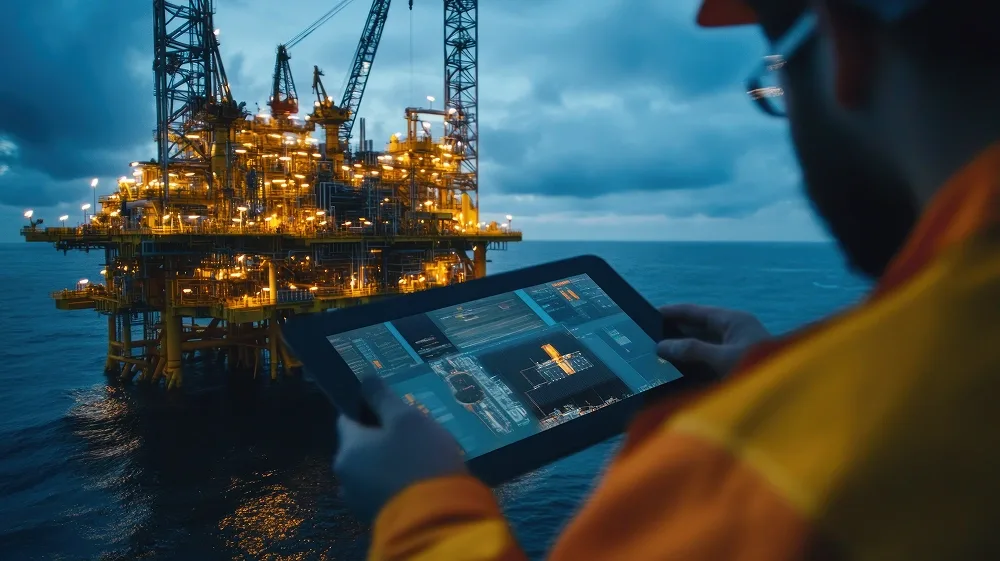
Remote fields and pipelines often remain operational blind spots where delayed or missing data leads to product loss, costly accidents, and environmental risks. Our development expertise includes:
- Pipeline Leak Detection Systems: Engineering embedded systems that monitor pressure, acoustics, and flow rates with local signal processing at the edge. This enables the early identification of abnormalities as they occur, minimizing product loss and environmental impact.
- Remote Asset Telemetry & Control Platforms: Developing edge devices with autonomous data transmission and remote control logic, extending visibility to isolated assets and reducing the need for frequent, costly site visits.
- Field Sensor Networks: Designing scalable, low-power sensor networks with self-healing topologies to establish a resilient, continuous data layer across distributed clusters.
- Gas Detection & Environmental Monitoring: Developing integrated gas analysis firmware with edge analytics and automated alerting mechanisms to streamline regulatory compliance and track environmental footprints.
2. Hazardous and Explosive Area Safety Systems

Working in volatile environments demands a strict reconciliation between certified, predictable hardware and rigorous safety constraints. We provide specialized development for certified architectures:
- Hazardous Area Monitoring & Alarm Systems: Engineering embedded monitoring platforms with real-time alarms and seamless SCADA integration to support rapid incident response and facility security.
- Intrinsically Safe Devices (Ex i): Designing low-power embedded hardware certified to Ex i standards, ensuring electrical and thermal energy remains below ignition-capable levels even in highly volatile environments.
- Flameproof / Ex-Rated Hardware (Ex d): Developing embedded control units paired with robust, explosion-resistant enclosures designed to contain internal ignition events and preserve critical infrastructure continuity.
- Explosion Protection & Fire Safety Systems: Integrating sensor automation, alarm logic, and automatic shutdown behavior into unified edge safety systems to mitigate losses and protect field personnel.
3. Worker Safety Systems
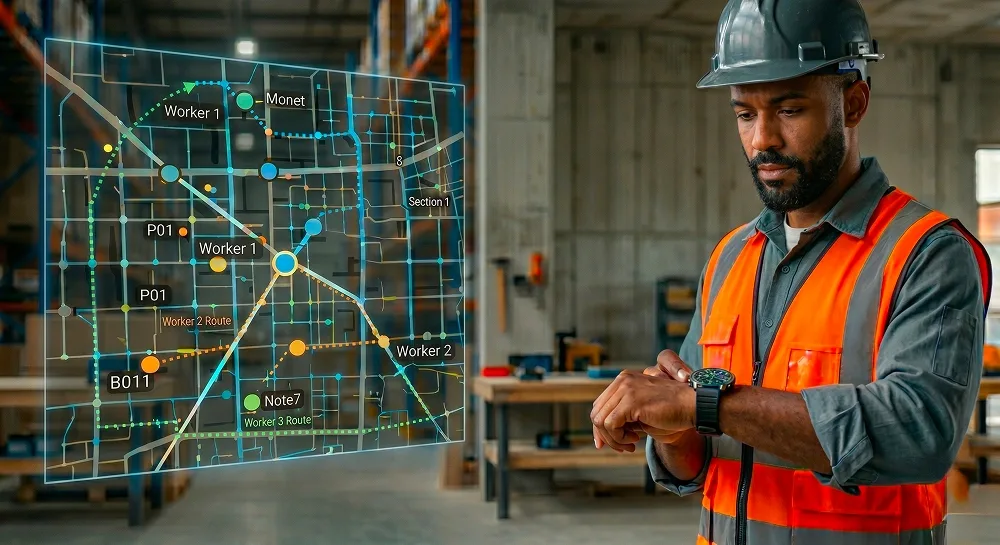
The human factor remains a critical risk variable in remote, hazardous, and physically arduous conditions. We develop active, embedded support systems to protect personnel in the field:
- Connected Worker Wearables: Developing wearable electronics equipped with biometric sensing, geolocation, and SOS emergency signaling to ensure real-time visibility into staff status.
- Automated Ventilation Control: Engineering sensor-driven automation architectures that continuously regulate airflow in confined spaces to mitigate gas accumulation and poisoning risks.
- Multi-Gas Detection Systems: Building multi-channel gas analyzers featuring edge processing and real-time calibration to deliver precise hazard detection in complex environments.
- Proximity Detection for Heavy Equipment: Implementing embedded safety platforms based on UWB or RF technologies to provide real-time alerting and prevent collisions between machinery and personnel.
Moving from Reactive to Resilient Execution
Embedded solutions enable the industry to shift from a reactive mode to proactive management, where edge intelligence detects anomalies and prevents escalation before small losses become high-cost operational events.
At UnioTech, we translate these complex operational challenges into deployable engineering systems including custom hardware, optimized firmware, communication architectures, low-power sensing, and production validation.
Structured Next Step: Engineering Evaluation
If you are evaluating how your oil and gas infrastructure performs under real-world field constraints such as connectivity limitations, battery life requirements, hazardous area deployment, or service access – a structured technical review is the most practical starting point.
UnioTech can help identify where operational visibility is limited, where underlying architectural risks remain hidden, and which custom embedded architecture makes practical sense for your environment.
Contact us to discuss your project requirements and schedule a technical assessment.
Where UnioTech Fits
UnioTech develops embedded platforms that help oil and gas operators turn wellheads, pipelines, refinery equipment, hazardous-area installations, and field assets into reliable data sources and controllable systems.
Our role can include system architecture, electronics design, embedded firmware, edge software, wireless and wired connectivity, sensor integration, industrial interfaces, cybersecurity-aware device architecture, validation support, and preparation for manufacturing.
If you are evaluating where your current infrastructure loses visibility, responsiveness, reliability, or scalability, a structured technical review is often the best starting point.
UnioTech can help identify which embedded architecture makes practical sense, which device layer should be built or modernized, and how to move from business need to a field-ready engineering solution.